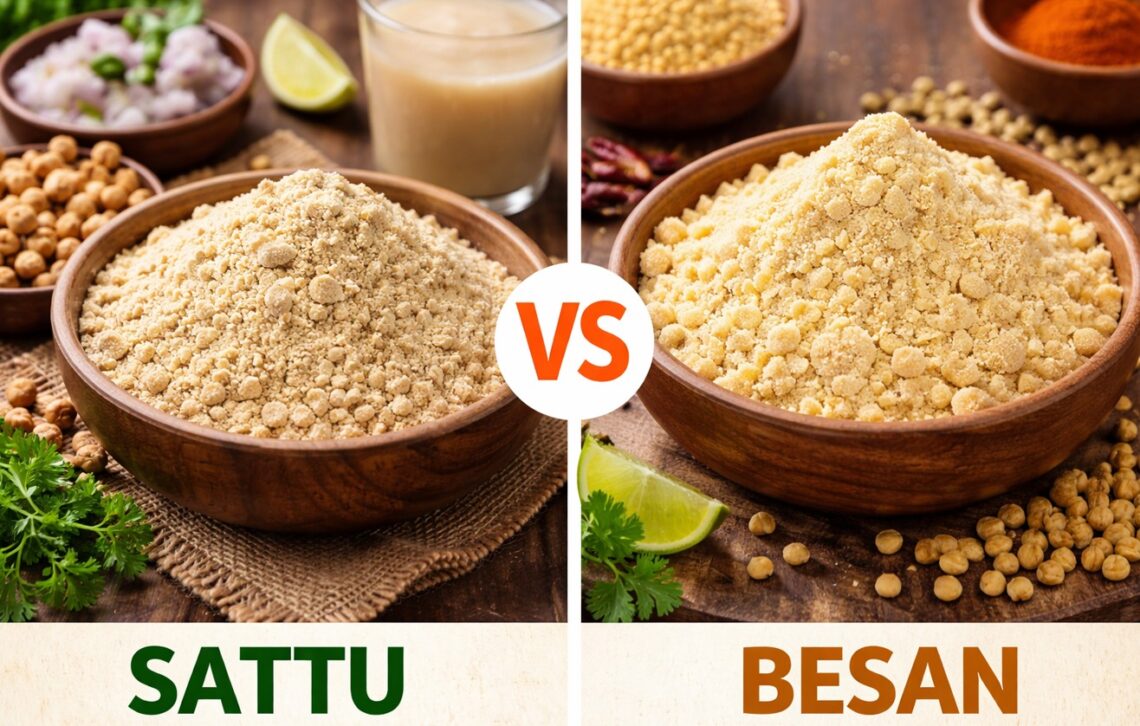
Many people think sattu and besan are the same, just two names for chickpea flour. This confusion is very common, especially outside eastern India. But if you have grown up in Bihar, Jharkhand, or eastern UP, you already know this is not true.
Sattu and besan may come from similar-looking ingredients, but they are prepared differently, used differently, and affect the body differently. One is a traditional, cooling food that has been eaten for generations, while the other is mainly used for cooking snacks and curries.
In this article, we’ll clearly explain the difference between sattu and besan, using simple words and real-life examples.
What Is Sattu?
Sattu is made from roasted chana (black gram or Bengal gram). The chana is roasted slowly until it becomes crisp and aromatic. After roasting, it is ground into a fine powder.
This roasting process is the key reason why sattu is considered light, cooling, and easy to digest.
In Bihar, sattu is not just food — it is part of daily life. People drink sattu sharbat in summer, eat sattu paratha, and even carry dry sattu while travelling.
Common uses of sattu:
- Sattu drink (sattu sharbat)
- Sattu paratha
- Litti filling
- Sattu chutney
- Mixed with onion, chilli, mustard oil, and lemon
What Is Besan?
Besan is made by grinding raw chana dal (split Bengal gram). The dal is not roasted before grinding.
Because besan is raw, it has a different taste, texture, and digestion process. Besan is mostly used in cooking and needs proper heat to become safe and tasty.
Common uses of besan:
- Pakora
- Kadhi
- Besan chilla
- Gatte ki sabzi
- Sweets like ladoo
Main Difference Between Sattu and Besan
1. Method of Preparation
The biggest difference lies in how they are made.
- Sattu: Made from roasted chana
- Besan: Made from raw chana dal
Roasting changes the nature of the flour completely.
2. Taste and Smell
- Sattu has a nutty, roasted smell and a slightly earthy taste
- Besan smells raw before cooking and has a mild, bean-like taste
That’s why sattu can be eaten without cooking, but besan cannot.
3. Digestibility
This is where sattu clearly wins.
- Sattu is easy to digest and cooling for the stomach
- Besan is heavy if eaten raw and can cause gas
Raw besan should never be eaten directly.
4. Effect on Body Temperature
- Sattu cools the body and is ideal for summer
- Besan is warming and better suited for cooked foods
This is why sattu drink is popular in hot regions like Bihar.
5. Nutritional Difference
Both are nutritious, but sattu is often considered more balanced.
Sattu:
- High protein
- High fiber
- Rich in iron and magnesium
- Keeps you full for long
Besan:
- High protein
- Lower fiber than sattu
- Good when cooked properly
Because sattu is roasted, its nutrients are easier for the body to absorb.
6. Usage in Daily Life
Sattu is more of a complete food, while besan is an ingredient.
- Sattu can be eaten raw, mixed with water or vegetables
- Besan must always be cooked
In villages, sattu is often eaten as a meal replacement.
Can Sattu Replace Besan?
No, and they should not be used interchangeably.
- You cannot make pakoras with sattu
- You should not drink besan mixed in water
Each has its own purpose and role in Indian cooking.
Which Is Healthier: Sattu or Besan?
If we talk about overall health and daily consumption, sattu is healthier.
It:
- Improves digestion
- Keeps the body cool
- Provides long-lasting energy
- Is suitable for summer and fasting
Besan is healthy too, but only when cooked properly and eaten in moderation.
Why the Confusion Exists
The confusion happens because:
- Both come from chana
- Both look like yellow flour
- Many people outside eastern India are unfamiliar with sattu
But once you understand the process, the difference becomes very clear.
Final Thoughts
Sattu and besan are not the same, even though they come from similar ingredients. Sattu is roasted, cooling, and can be eaten raw. Besan is raw, heavier, and meant only for cooking.
If you are looking for something light, nutritious, and traditional, sattu is a great choice. If you want to cook snacks or curries, besan is the right ingredient.
Understanding this difference helps you use both correctly and get the best out of them.