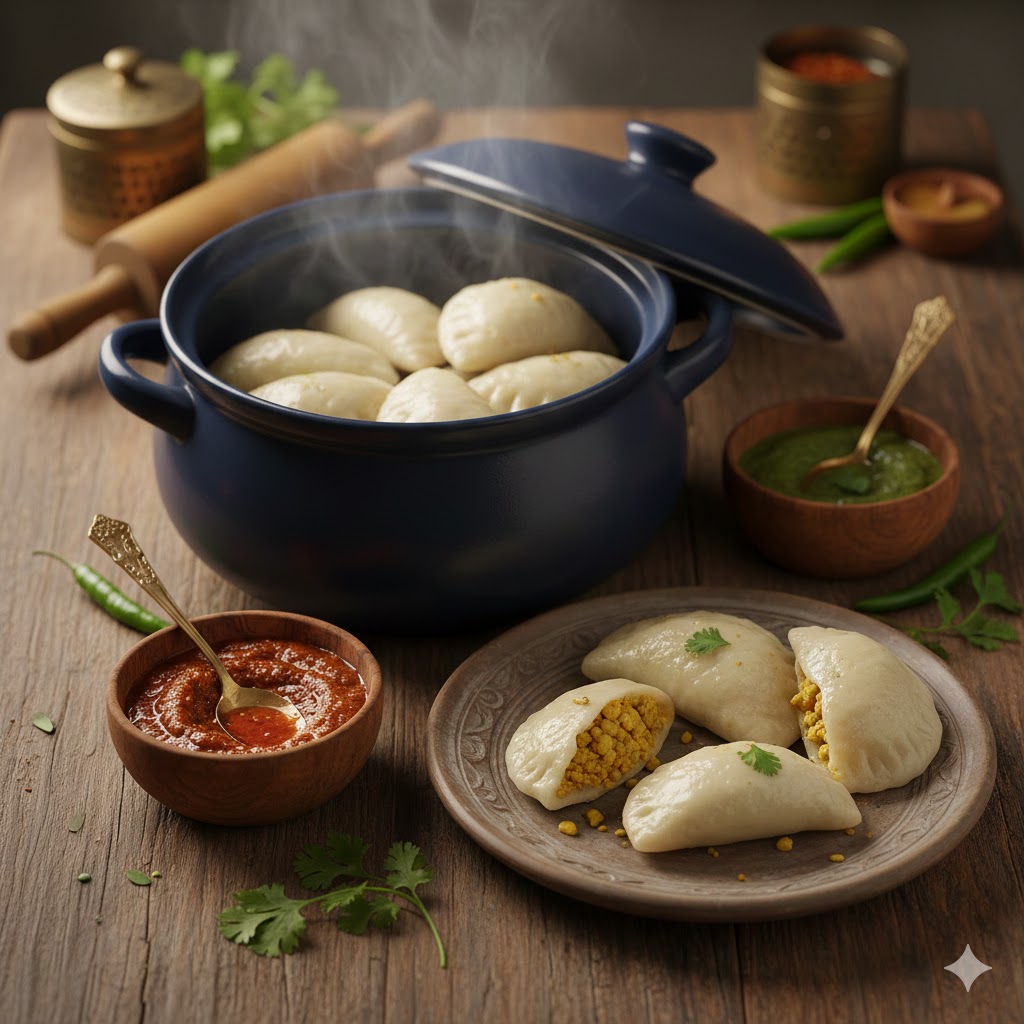
If you grew up in a Bihari household, the sight of a steaming dhakna (lid) being lifted to reveal rows of snowy white, crescent-shaped dumplings is a core memory. Dal Pitha is our comfort food. It’s hearty, protein-packed, and—most importantly—completely oil-free.
While the rest of the world is obsessed with Momos and Dim Sums, we’ve been enjoying their healthier, more flavorful cousin for generations. Here is how you can recreate that authentic taste in your own kitchen.
What Makes a Pitha “Authentic”?
It isn’t just the ingredients; it’s the Chawal ka Pitha (rice flour shell) and the Chana Dal filling. The crust should be soft but firm enough to hold its shape, and the filling must have that distinct kick of ginger, green chilies, and a pinch of hing (asafoetida).
Ingredients You’ll Need
For the Filling (The Soul):
- Chana Dal: 1 cup (soaked for 4–5 hours or overnight)
- Garlic: 8–10 cloves (don’t be stingy here!)
- Green Chilies: 3–4 (adjust to your heat level)
- Ginger: 1-inch piece
- Cumin Seeds (Jeera): 1 tsp
- Hing: A generous pinch
- Salt: To taste
- Fresh Coriander: Finely chopped
For the Dough (The Shell):
- Rice Flour: 2 cups
- Water: Approx. 2.5 cups
- Salt: A pinch
- Oil: 1 tsp (just to grease your palms)
Step-by-Step Instructions
1. Prep the Filling
Drain the soaked Chana Dal completely. You want as little water as possible. Grind it with the garlic, ginger, chilies, and cumin into a coarse paste.
Pro Tip: Avoid making it a smooth puree. That slight crunch of the dal is what gives Pitha its character. Stir in the salt, hing, and fresh coriander just before you start stuffing, or the salt will make the dal release water.
2. The Trick to Perfect Rice Dough
This is where most people struggle. You cannot knead rice flour with cold water.
- Boil the water in a heavy-bottomed pan with a pinch of salt.
- Once it bubbles, turn the heat to low and add the rice flour.
- Stir vigorously for a minute until it forms a lumpy mass.
- Turn off the heat, cover it, and let it steam in its own heat for 5 minutes.
- While still warm (but touchable), grease your hands and knead it into a smooth, crack-free dough. If it’s too dry, add a spoonful of hot water.
3. Shaping the Pitha
Take a small ball of dough and flatten it into a circle using your thumb (like a small bowl). Place a spoonful of the dal mixture in the center. Fold it into a semi-circle and press the edges. You can leave the center slightly open—the traditional Bihari way—or seal it completely.
4. Steaming
Boil water in a steamer or a pateela with a colander on top. Grease the base so they don’t stick. Arrange the Pithas and steam for 12–15 minutes. When the outer layer looks glossy and doesn’t stick to your finger, they are done.
How to Eat It (The Bihari Way)
You don’t just eat Pitha; you experience it.
- Fresh: Serve them hot with Spicy Tomato Chutney (roasted on fire) or Dhaniya-Pudina Chutney.
- The Next Day Breakfast: This is the secret—if you have leftovers, slice them up and pan-fry them with some mustard seeds and curry leaves until the edges are crispy. It’s arguably better than the steamed version!
Why you should make this today
In an era of processed snacks, Dal Pitha is a reminder that the best food is often the simplest. It’s vegan, gluten-free, and tastes like home.